Vlogger: A Bold Script Handwritten Font for Modern Web Design
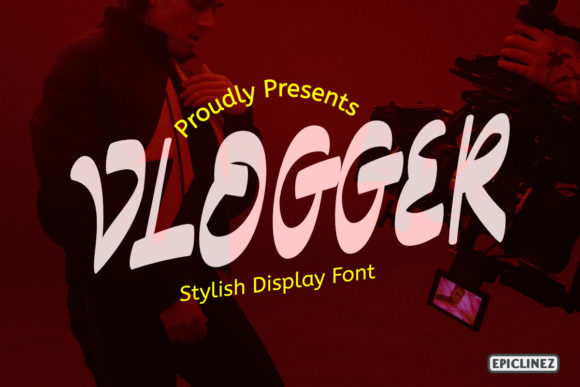
Two weeks ago, I was finalizing the hero section of a boutique coaching website — clean layout, soft photography, warm tones — and the headline just felt flat. The sans serif I’d used for months suddenly looked too neutral, too safe. So I dropped in Vlogger, the Script Handwritten font I’d bookmarked months earlier, and typed “Your First Step Starts Here.” Instantly, the page breathed. Not because it’s flashy, but because Vlogger carries a confident, human rhythm — bold enough to hold attention, casual enough to feel inviting. That’s when I knew this wasn’t just another decorative Fonts download. It was a deliberate tone-setter.
Vlogger for Hero Headlines and Landing Page Titles
On desktop, Vlogger shines at 48–64px in hero sections — especially over light image overlays or muted gradients. Its thick downstrokes and relaxed letter connections create strong visual weight without sacrificing warmth. I tested it against a subtle sans serif body font (Inter, set at 18px/1.6), and the contrast gave immediate hierarchy: users’ eyes landed on the headline first, then flowed naturally into the subhead and CTA button. On mobile, I scaled Vlogger down to 36px with tighter tracking — still legible, still expressive. No blurring, no rendering hiccups in Chrome or Safari. As a Script Handwritten display font, it’s not meant for paragraphs — but as a landing page title? Absolutely. It signals creativity, approachability, and intentionality — all in one line of text.
Vlogger for Digital Ads and Social Media Graphics
I used Vlogger to design three Instagram carousel banners for a course launch campaign. Each slide featured a short phrase (“Clarity Over Chaos,” “Build With Confidence,” “Done Is Better Than Perfect”) set in Vlogger over minimal background textures. Because Vlogger is a Script Handwritten font with high x-height and open counters, even at 28–32px on small screens, the words stayed scannable in under two seconds — critical for feed scrolling behavior. Unlike many handwritten fonts that collapse into illegibility at smaller sizes, Vlogger maintains its bold personality without sacrificing clarity. And since it’s a commercial Fonts package, I could confidently export static PNGs and animated MP4s for paid ads — no licensing surprises.
Vlogger for Blog Headers and Editorial-Style Web Content
When redesigning a creative entrepreneur’s blog, I swapped their previous serif header font for Vlogger on post titles. Paired with a gentle serif like Lora for body copy, the combination struck a perfect balance: Vlogger added voice and character, while Lora grounded the layout with readability and quiet authority. This pairing works especially well for long-form content where personality matters — think reflection pieces, behind-the-scenes stories, or brand philosophy pages. As a Script Handwritten typeface, Vlogger avoids feeling childish or gimmicky because its stroke contrast and spacing are intentionally refined, not overly ornamental. It feels like someone thoughtful wrote it — not auto-generated.
Vlogger for Online Shop Banners and Product Launch Graphics
A client launching a small-batch ceramics shop needed banner graphics for their Shopify homepage and email headers. They wanted “handmade” energy without looking craft-fair generic. Vlogger delivered — its bold, slightly uneven baseline and confident curves mirrored the organic imperfections of hand-thrown pottery. I used it exclusively for short phrases (“New Glazes Live,” “Hand-Built, Small Batch,” “Ships Next Week”) over neutral linen-textured backgrounds. For accessibility, I kept contrast ratios above 4.5:1 by using charcoal gray (#333) on off-white — never black on dark, which can muddy Vlogger’s delicate joins. As a commercial Fonts license, it covered web, email, and digital ad use — no extra fees, no legal backtracking.
Vlogger for Portfolio Websites and Creative Brand Kits
In a recent portfolio site for a freelance illustrator, I used Vlogger only for the site’s logo lockup and section dividers — never for navigation or body text. Why? Because Vlogger is a Script Handwritten font built for impact, not endurance. Its charm lies in brevity: a name, a tagline, a project title. I paired it with a clean, low-contrast sans serif (Satoshi) for everything else — creating breathing room and reinforcing professionalism. In their downloadable brand kit, Vlogger appeared in both .woff2 (for web) and .otf (for Figma and print) formats — plus stylistic alternates for lowercase “a” and “g,” giving subtle customization without needing multiple weights. That flexibility matters when building reusable design assets.
Vlogger for Flyers, Posters, and Campaign Landing Pages
For a local wellness workshop series, I designed a responsive campaign landing page where Vlogger anchored every major visual cue: the main headline, the date block (“Saturday, June 15 • 10 AM”), and even the RSVP button label (“Save My Spot”). Because Vlogger is a Script Handwritten font with generous letter spacing and strong stroke definition, it remained crisp on retina displays and held up beautifully when exported as SVG for email footers or PDF flyers. I avoided using it over busy photos — instead, placing it on solid color blocks or soft blurred backgrounds ensured maximum legibility. As a premium Fonts choice, it elevated the entire campaign’s perceived value without requiring custom illustration.
Vlogger Font Pairing Tips for Web Designers
Think of Vlogger as your expressive lead vocalist — it needs a reliable backing band. For most web projects, pair it with a highly legible sans serif (like Inter, Poppins, or Manrope) for UI text, buttons, and body copy. If you’re aiming for editorial depth, try a warm serif like Cormorant Garamond or Literata. Avoid pairing Vlogger with other script or handwriting fonts — the contrast would blur, not clarify. And always test Vlogger in context: load it in your staging environment, check loading performance (it’s lightweight as a single Script Handwritten file), verify fallback behavior, and preview on iOS and Android. It includes standard Latin characters and basic punctuation — perfect for English-language sites, blogs, and digital campaigns.